


天龙八部黄日华版
China rejects US-led statement on missile test notification, warns against ‘political manipulation’_我的网站

一 |
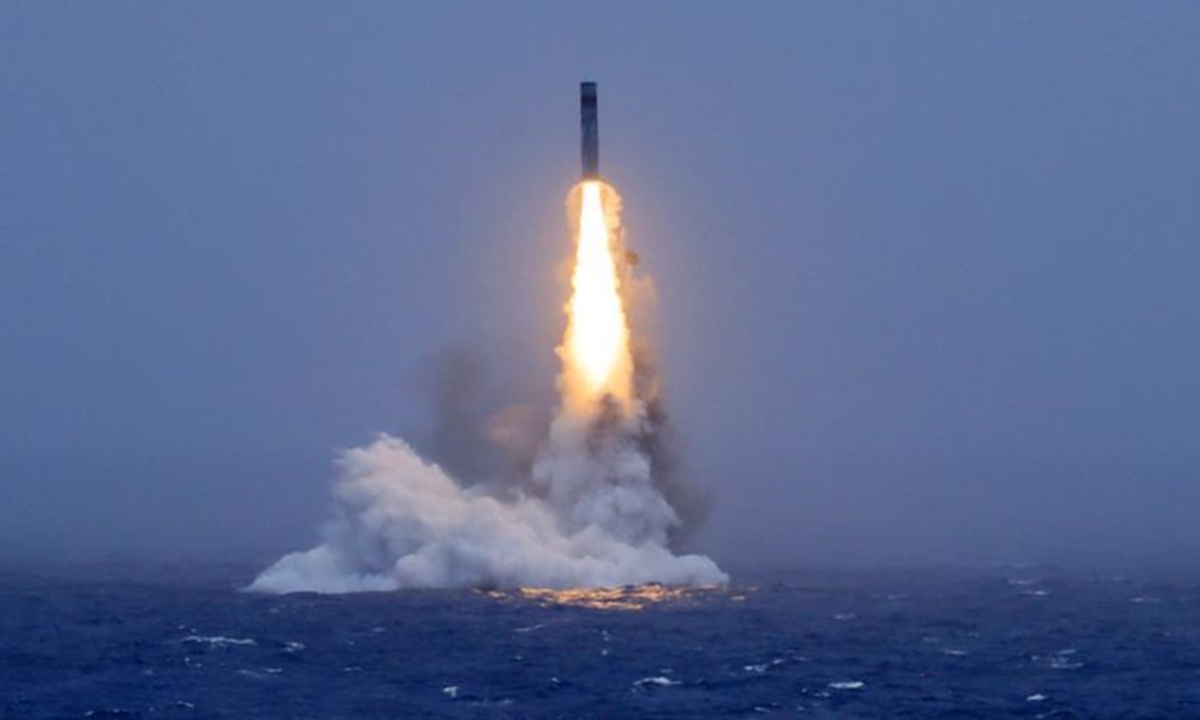
China on Wednesday slammed a US-led joint statement regarding China's notification of a ballistic missile launch, calling the move as being driven solely by political motives and exposing the hypocrisy and double standards of the US and certain countries.
"The so-called joint statement by the US and relevant countries at the Conference on Disarmament, which brandished the Hague Code of Conduct Against Ballistic Missile Proliferation and alluded to China's missile test launch, was driven solely by political motives and fully reveals their hypocrisy and double standards," Chinese Foreign Ministry Spokesperson Guo Jiakun said on Wednesday.
China urges relevant countries to stop abusing multilateral arms control mechanisms, replace irrational confrontation with sincere dialogue and create conditions necessary for enhancing dialogue and exchanges in the area of arms control, Guo said.
The comments came after China's Ambassador for Disarmament Affairs Li Chijiang firmly rejected the US-led joint statement at a UN meeting in Geneva on Tuesday local time, stressing that China's legitimate defense modernization should not be called into question, and its goodwill in providing advance notification of missile launch should not be hijacked by geopolitical calculations.
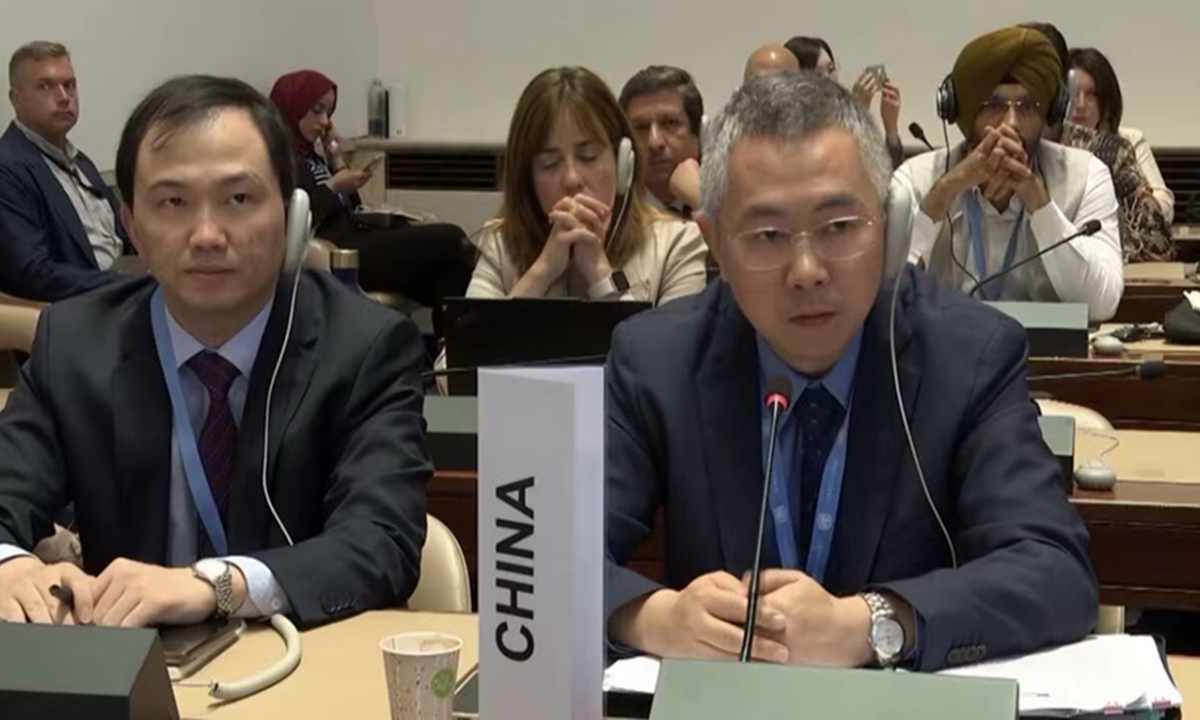
At a plenary meeting of the Conference on Disarmament in Geneva on Tuesday, the US and other 40 countries issued a joint statement on what they called "notifications of ballistic missile launches," criticizing China's submarine-launched intercontinental ballistic missile test conducted in July.
In response, Li Chijiang called the move political manipulation and blatant double standards and said China firmly opposes the abuse of the Conference on Disarmament for political maneuvering.
Driven by its own political interests, the US had rallied a number of countries, including some that are not members of the conference, to join the statement and had nitpicked and leveled baseless accusations against China's goodwill gesture of providing advance notification of the missile test, he said.
He noted that the US criticism was groundless, saying Washington had cited the voluntary political commitment of the Hague Code of Conduct Against Ballistic Missile Proliferation (HCOC) to demand that China provide advance notifications of missile launches. However, China is not a member of the HCOC and is therefore not bound by its provisions.
The Chinese People's Liberation Army Navy announced on July 6 that one strategic nuclear submarine of the navy successfully launched a strategic missile carrying a dummy warhead toward relevant high seas of the Pacific Ocean at 12:01 pm, which landed precisely within the designated waters.
China notified relevant countries in advance of the test launch of a nuclear submarine-based strategic missile, demonstrating the openness and transparency of the Chinese armed forces, said Chen Xi, a spokesperson for the Ministry of National Defense, at a press conference in July.
The US led statement at the Geneva disarmament conference seeks to inject geopolitical rivalry into a multilateral arms control platform. Rather than advancing genuine disarmament, Washington is seeking to stigmatize China as a security threat, constrain its legitimate defense related development and strategic deterrence capabilities, rally an anti China bloc and reinforce US led hegemony, Zhang Junshe, a Chinese military affairs expert, told the Global Times.
The US had repeatedly hyped China's July test launch. Previously on July 8, an official from the US Department of State criticized China's missile test launch, claiming that China notified the US too late and didn't give sufficient detail.
In response, Chinese Foreign Ministry spokesperson Mao Ning said at a press conference that China has stressed more than once that the test launch complies with international law and customary international practice and is not directed at any specific country or target. The Chinese side has released relevant information in a timely manner and notified the US and other countries beforehand.
Distracting attention
The US-led group doesn't represent the international community. Its accusations over China's missile tests lack both reason and legitimacy, reflecting prejudice, hegemonic thinking and an attempt to constrain China's development, said a Beijing-based scholar of China-US relations.
By rallying the other 40 countries to pressure China, the US has once again exposed its familiar playbook of double standards, bloc-building and confrontation. More broadly, Washington's China policy increasingly reflects strategic anxiety and a lack of confidence - not only in governance, the economy, and technology, but also in the military domain, said the expert.
According to the list of 40 other countries published by the US State Department, the signatories include US allies in Europe and Asia. The statement also called on all countries, particularly nuclear-weapon states that launch intercontinental ballistic missiles (ICBMs), submarine-launched ballistic missiles (SLBMs), and space launch vehicles (SLVs), to provide notification at least 24 hours in advance. "Such notifications should include information such as the general class of the ballistic missile or SLV, the planned launch notification window, the launch area and the intended direction of flight."
Zhang Jiadong, professor at the Center for American Studies, Fudan University, said by demanding at least 24 hours' advance notice and detailed launch information, the US wants to gain greater visibility into China's strategic nuclear capabilities by securing earlier and more specific data on missile tests.
By hyping transparency and notification requirements, Washington is seeking to pressure China into revealing more about its military capabilities, reflecting growing anxiety over China's capability, even as questions remain over Washington's own transparency regarding missile tests and nuclear deterrence, said Zhang Jiadong.
Military affairs expert Zhang Junshe also noted that the US has intensified its criticism of China to deflect attention from its own expansion of extended deterrence, nuclear-sharing arrangements and missile-defense programs. These moves heighten the risk of nuclear confrontation, while Washington appears to believe that accusing other countries of lacking transparency can help justify its own military buildup and destabilizing policies.
Moreover, the US possesses one of the world's largest nuclear arsenals and conducts frequent ICBM tests. Against that backdrop, it is absurd for Washington to criticize China, which keeps nuclear capabilities at the minimum level required for national security, said Zhang.
For example, in a single test event last year, the US Navy conducted four scheduled test launches of unarmed Trident II D5LE submarine-launched ballistic missiles from an Ohio-class ballistic missile submarine off Florida between September 17 and 21, 2025. The launches brought the Trident II D5 strategic weapon system to 197 successful flight tests, according to the US Navy.
At the UN meeting in Geneva on Tuesday, China's Ambassador for Disarmament Affairs Li Chijiang also noted that the US was in no position to criticize China over missile testing. China has conducted only three intercontinental ballistic missile tests to date, the fewest among the five nuclear-weapon states, while the US has carried out more such tests, and more frequently, than any other country, he said.
The US has itself failed to properly fulfill responsibilities regarding missile-test notifications and therefore has no grounds to criticize China's voluntary advance notification, Li added.
Li stressed that China remains committed to peaceful development and follows a self-defensive nuclear strategy. China keeps its nuclear forces at the minimum level required for national security and does not participate in any form of nuclear arms race, he said.
China's nuclear forces are an indispensable part of efforts to deter nuclear war, safeguard world peace and security, and maintain global strategic stability. "How can the US, a prolific missile tester and relentless arms expander, fault China for voluntarily giving advance notice? That is hegemonic double standards - and a blatant affront to international fairness and justice," said Zhang Junshe.
。

二 | 打了四年半的俄乌冲突,终于迎来了拐点。

三 | 2026年以来,特朗普政府一边施压乌克兰让步止损,一边主动重启和俄罗斯的沟通渠道,持续数年的血腥消耗战,趋向已然从“要不要停火”,变成了“如何体面收尾”。 然而,就在和平曙光初现之际,有人却在拼命拖后腿,死死拖住停战进程。对此很多人习惯性把锅甩给美国。 可深挖之后才发现,这场战争最难终结、最不愿终结的幕后黑手,其实另有其人... 现在到底是个什么局面。 俄军早就不是刚开战时那副打法了。以前是大兵团推进,现在呢?小股突击、精确打击、慢慢蚕食。一句话,稳扎稳打,主动权攥得死死的。

四 | 反观乌克兰,越打越吃力。兵源补不上,装备越打越少,前线的士气你说还能剩多少?2022年那会儿,乌军还能组织反攻,到了2024、2025年,基本就是被动防御了。

五 | 俄军一步步压缩乌军的空间,乌军一点点往后退。

六 | 这个趋势一旦形成,就很难逆转了。 所以,现在已经不是"俄乌谁能赢"的问题,而是"乌克兰还能撑多久"的问题。 那既然撑不住了,为什么不坐下来谈? 这就说到最关键的地方了。 很多人一直有个执念:美国是这场战争的始作俑者,是最大的操盘手。只要美国点头,战争就能结束。 但是,普京早就说过,俄罗斯面对的不是乌克兰,而是整个西方集体。北约东扩了多少年?从冷战结束到现在,一波接一波,一路推到俄罗斯家门口。你觉得这是美国一个国家能办到的? 不是。 美国是牵头的,没错。但欧洲那些国家呢?一个个跟着拱火,今天送坦克,明天送导弹,后天开会讨论再加几十亿欧元援助。波兰、德国、法国、英国……谁的手干净? 说白了,美国是那个举旗子的,但真正把火烧旺的,是整个西方阵营。 他们为什么这么干? 因为对他们来说,这场仗太划算了。花点钱、出点武器,就能让俄罗斯持续放血。

七 | 不用自己死人,不用自己上战场,坐在办公室里看别人互相消耗。这种买卖,谁不愿意做? 所以你明白了吧,不是美国一个国家不想停,是整个西方集体都不想停。

八 | 只要还能消耗俄罗斯,他们就会一直给乌克兰输血。 那俄罗斯呢?俄罗斯想不想谈? 说实话,俄方的态度一直很明确:谈判大门始终开着。 从2022年土耳其伊斯坦布尔谈判,到后来各种渠道的接触,俄方从来没有把话说死过。普京多次公开表态,俄罗斯愿意通过外交途径解决问题。 但谈判这东西,得双方都有诚意才行。 乌克兰那边什么情况? 说句不好听的,基辅现在还有多少自主权?打不打、谈不谈、谈到什么程度,很多时候不是泽连斯基说了算,是华盛顿和布鲁塞尔说了算。

九 | 西方说"继续打",乌克兰就得继续打。西方说"可以谈",乌克兰才能坐下来。 这就形成了一个死循环。

十 | 乌克兰想停战?可以,但停了战,西方的援助就断了。援助一断,经济本来就崩了,政府拿什么维持?国内那些势力还不翻了天? 继续打?也行,但每多打一天,就多死一批人,多毁一座城,多欠一笔债。国家的家底,就这么一点点耗光了。

十一 | 你说乌克兰难不难?太难了。 但这个难,是谁造成的? 是西方。他们把乌克兰架在火上烤,自己坐在旁边扇风。乌克兰停也不是,打也不是,完全被绑在了西方的战车上。 所以这场战争的本质到底是什么? 不是俄罗斯和乌克兰的恩怨,不是美国和俄罗斯的对抗,而是西方霸权扩张和大国博弈的一场豪赌。

十二 | 北约东扩,挤压俄罗斯的战略空间,这是因。 俄罗斯出手反击,这是果。

十三 | 乌克兰被推到最前面当棋子,这是代价。 西方用乌克兰人的命,去消耗俄罗斯的国力。乌克兰人在前线流血,西方在后方数钱。

十四 | 这个账,迟早要算。 那接下来会怎么收场? 我的判断很明确:当乌克兰的抵抗能力衰减到一定程度,当西方发现继续投入已经换不来更多消耗价值的时候,这场仗就会迎来终局。

十五 | 不是和平到来,而是消耗结束。 到那时候,乌克兰会面对什么? 经济崩塌、民生凋敝、大量人口流失、基础设施千疮百孔。这些不是一时半会儿能恢复的,可能需要十年、二十年,甚至更久。 而这一切的代价,都要由乌克兰人民自己来扛。 最后说句掏心窝子的话。这个世界上,从来没有免费的援助。 西方给乌克兰的每一颗子弹、每一枚炮弹,背后都标着价格。这个价格,不是钱,是主权,是尊严,是一代甚至几代人的命运。 小国在大国博弈里,最忌讳的就是把全部身家押在外部势力身上。

十六 | 你以为人家是来帮你的,其实人家是来用你的。 等你没有利用价值的那天,谁会管你死活? 俄乌这场仗,给全世界所有国家都上了一课。 依附别人,永远不如靠自己。牺牲主权换不来安全,只能换来更深的深渊。 大结局快来了。但对乌克兰来说,真正的苦难,可能才刚刚开始。返回,查看更多。

十七 |
Current article:http://fzfvxz.shengyaodanrongchui.buzz/list_5th7/7kio24.html
Published on:10:34:09