当地时间9月13日,美国劳工部公布数据显示,今年8月美国消费者价格指数(CPI)同比上涨8.3%,随后在通胀忧虑蔓延的情况下,当日美股市场出现暴跌,三大股指创下两年多来最大单日跌幅。多位分析人士在接受总台央视记者采访时指出,CPI同比增速居高不下,已连续6个月高于8%,特别是核心CPI涨幅加速,表明美国通胀压力短期内难以缓解,而美联储为控制物价被迫持续激进加息,将对美国股市乃至整体经济造成进一步冲击。
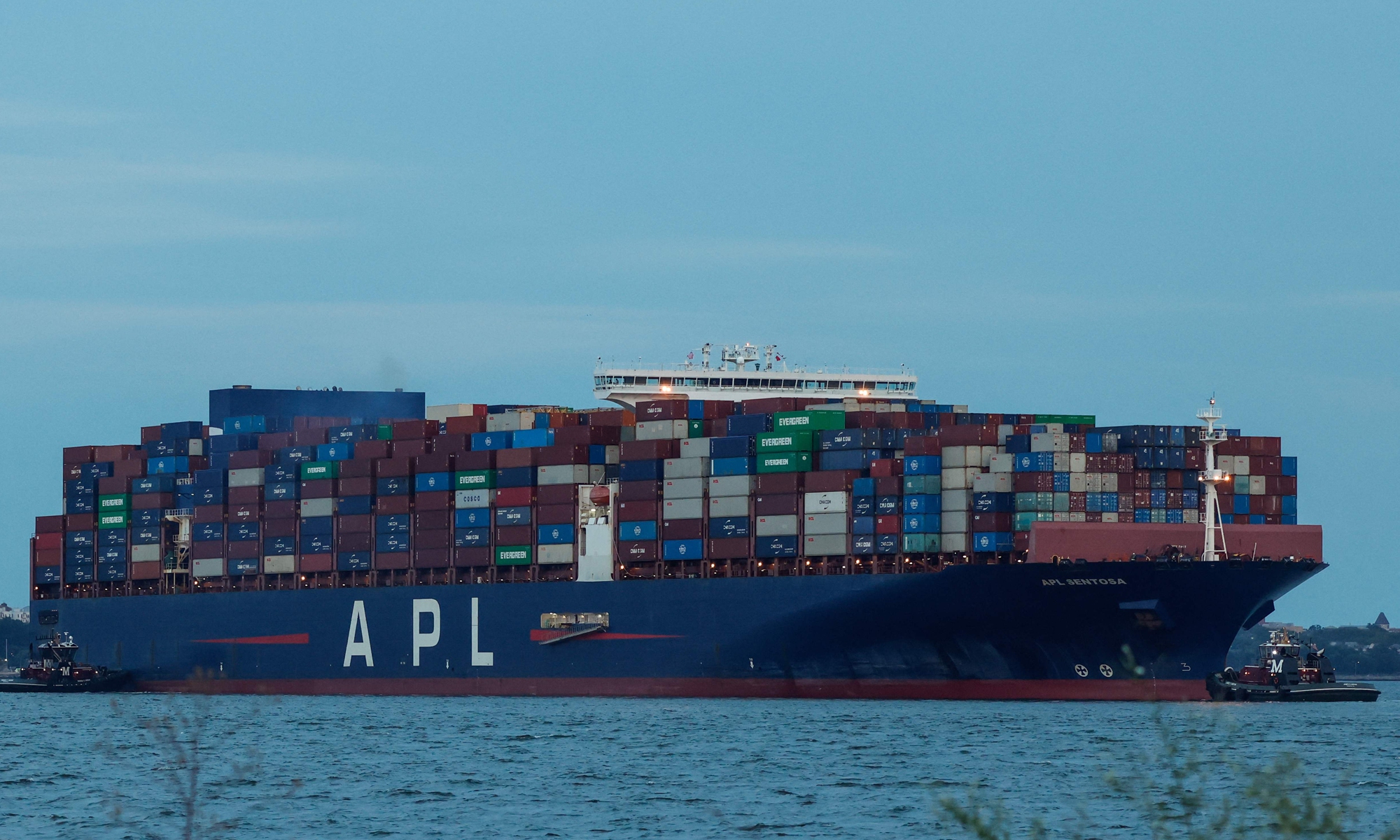
Trade File photo: VCG
Months-long American export license delays are costing the US billions in exports and eroding American market share globally, the US-China Business Council (USCBC) said in a flash survey released on Tuesday.
The survey noted that poorly calibrated US export controls weaken American companies in China, ceding market share to foreign competitors while reducing the profits available for research and development (R&D).
Designed originally to safeguard national security and serve legitimate foreign policy interests, the US export licensing system has become increasingly politicized, gradually turning into a political tool that obstructs normal economic and trade exchanges. The USCBC survey serves as a stark reminder of how such overreach has backfired on American companies.
In recent years, US politicians have clung to the misplaced belief that restricting exports of advanced goods and core technologies would slow the upgrading of China's tech industry and secure America's technological supremacy. Yet, they overestimated their leverage, while grossly underestimating the developmental resilience that China has built over decades of growth.
Today's China is no longer a passive follower or technology importer. Instead, it has grown into a robust innovation powerhouse with complete industrial chains and strong endogenous driving forces in numerous key technological sectors. Rather than stifling China's technological progress, America's escalating containment measures have only forced China to accelerate industrial upgrading and supply chain optimization.
In the meantime, while US politicians have been indulging in the illusion of building a "tech wall" through licensing restrictions, the self-inflicted damage to the US has grown increasingly impossible to ignore. Reuters reported in August 2025 that thousands of license applications by US companies to export goods and technology around the globe, including to China, were in limbo because turmoil at the agency in charge of approving them had left it nearly paralyzed.
The USCBC survey also listed license delays as the most common challenge identified by 95 percent of companies. For items bound for Chinese customers, two-thirds of companies have had licenses pending for at least three months, exceeding the US Commerce Department's statutory requirements to process applications within 90 days, and 31 percent have had licenses pending for one to two years.
As a result, American tech companies can only watch helplessly as orders that once belonged to them flow to suppliers in other countries. These licensing delays not only impose administrative costs far exceeding expectations, but also severely disrupt normal cross‑border commerce. From semiconductor components to high‑end industrial materials, and from aerospace ancillary products to cutting‑edge research instruments, countless routine trade transactions have been artificially severed. The market advantages that US firms took years to forge is being eroded by the very policies meant to protect them.
From a deeper economic perspective, the export licensing system is particularly lethal to America's innovation ecosystem. Usually, companies allocate a significant portion of their revenue to R&D and technological innovation. However, if the products resulting from these investments cannot be sold in a major market, investment returns will be affected, and the incentive for companies to continue investing in innovation will be undermined. As underscored by the USCBC survey, the export licensing regime diminishes America's ability to innovate and undermines US economic security.
In trying to contain China's industrial rise, the US has ended up undermining its own interests, laying bare the fundamental divide between two development paths. On one hand, the US attempts to fragment global industrial chains through administrative intervention, trade barriers and technological "decoupling" to sustain its dominant position. Yet, such obstructive practices only undermine the competitiveness of domestic industries and weaken America's own innovative vitality.
On the other side, China adheres to high-standard opening-up and win-win cooperation. By continuously opening its vast domestic market and providing foreign companies with a stable business environment, China has built a mutually beneficial global industrial collaboration network. China understands that genuine competitiveness comes from sustained independent innovation, sophisticated industrial supporting systems and market vitality. Precisely because China has chosen to expand openness and deepen cooperation, it has demonstrated remarkable resilience in the face of external containment and constructed a globally integrated supply network.
。
△美国劳工部数据显示,尽管8月CPI同比增速(蓝线)连续两个月出现下滑,但仍连续6个月高于8%,表明通胀水平居高不下。

B | 住房和食品价格持续上行美国劳工部当日公布数据显示,今年8月美国消费者价格指数(CPI)环比上涨0.1%,高于市场预期的下降0.1%,同比上涨8.3%,高于市场预期的上涨8.1%。

C | 当月,剔除波动较大的食品和能源价格后,核心CPI环比上涨0.6%,同比上涨6.3%,均高于市场预期。

D | 尽管CPI同比增速连续两个月出现下滑,但仍维持在历史高位,并连续6个月高于8%,表明通胀水平居高不下,其中住房、食品和医疗保健价格上涨是主要推手。具体来看,占CPI权重三分之一的住房成本环比上涨0.7%,同比上涨6.2%;食品价格环比上涨0.8%,同比上涨11.4%;医疗保健成本环比上涨0.8%,同比上涨5.6%。分析认为,美国住房和食品价格持续上行,将对消费者心理产生影响,不仅表明通胀具有顽固性,也令美联储缺乏放缓加息的空间,未来将被迫持续激进加息应对通胀。密苏里大学助理教授费利佩·席尔瓦(Felipe Silva)在接受总台央视记者采访时表示:“关于今天刚刚公布的通胀数据,它们比预期的要高一些,市场原本预期比实际数据低0.2个百分点。然而,我想说的是,未来两个月的情况基本就像一个依赖函数,取决于通货膨胀和经济衰退的担忧如何实际演变,你会看到美联储实际上变得更加激进或不那么激进。”费利佩·席尔瓦指出:“截至目前,市场基本已经更新了关于下次加息的预期,我认为这已经明确了,市场预期下次将会加息75个基点,这是到目前为止最有可能出现的情况。”△彭博社报道称,通胀超预期或将令美联储更激进地收紧货币政策。专家详解股市为何暴跌目前市场普遍预期,美联储将不惜以经济增长放缓为代价,通过激进加息抑制需求,从而达到控制物价的目的。美联储主席鲍威尔此前在全球央行年会上表示,美联储加息至限制性水平后可能会保持一段时间,强调历史经验表明不应过早放松货币政策。他同时承认,降低通胀可能需要持续一段时间内低于趋势的经济增长,劳动力市场状况很可能会出现一些疲软,这会给美国家庭和企业带来痛苦。

E | 鲍威尔等官员的强硬表态,被一些市场人士解读为“只要不看到通胀数据明显好转,美联储就会坚持激进加息的货币政策”,而13日的CPI数据发布后,忧虑情绪迅速弥漫,美国股市当日出现暴跌。截至当日收盘,道琼斯工业平均指数下跌1276.37点,跌幅达3.94%,至31104.97点;标准普尔500指数下跌177.72点,跌幅达4.32%,至3932.69点;纳斯达克综合指数下跌632.84点,跌幅达5.16%,至11633.57点。三大股指均创下2020年6月11日以来最大单日跌幅。本次下跌令道琼斯指数在2022年累计下跌14%,标普500指数下跌17%,纳斯达克综合指数下跌26%。海投全球创始人兼CEO王金龙在接受总台央视记者采访时分析称:“今天美国股市全部暴跌,基本上是由CPI数据超出市场预期导致的。

F | 市场最近一周以来对CPI和美联储加息幅度的预期相对比较乐观,股市也一路反弹,而今天直接跌破到月初的水平。8月的CPI数据同比上涨8.3%并不是很离谱,相对7月的8.5%还有小幅下降,但是核心CPI与去年同期对比大幅上涨,而且相对7月的涨幅还在加速。市场对美国能够在今年内有效控制住CPI失去了信心。

G | 核心CPI的加速上涨,体现出通胀更加具有‘粘性’。

H | 虽然汽油和出行等价格已经下降,但房屋和食品价格还在上升,同时随着工资水平的提升,服务的价格也在持续上涨。”王金龙指出:“市场本周初基本上预计美联储在9月加息75个基点,甚至小概率会只加息50个基点。但在8月CPI数据发布之后,整体转向,市场已经预期有1/3的可能会加息100个基点。

I | 利率快速上涨会加剧企业和个人的资金成本,进一步压缩利润空间,导致美国经济基本失去了‘软着陆’的希望,所以市场反应剧烈,‘去风险化’的集体意识再次抬头。

J | 市场整体抛售资产,持有现金,不仅是股市,包括美国国债、黄金和石油等资产全线下跌,而美元指数在高位上继续攀升。”费利佩·席尔瓦也进一步指出:“如果利率上升,你的资金成本就会随着时间的推移上升,你的消费决定也会受到影响,因此消费者信心就会下滑,这是你能想到的最直接的影响。

K | 加息也会对股票价格产生影响,当你加息时,股票价格会有负面反应。当然,企业也会更新它们的投资和消费决定,由于企业预计消费者信心放缓,所以它们会迟疑,自然的后果是,它们将减少投资,它们将减少岗位,而这对经济有类似的整体影响。

L | 简而言之,这就是货币政策的传导方式。

M | ”与此同时,《华尔街日报》分析称,尽管美国目前的就业数据尚可,但如果有人认为美联储遏制通胀的举措不会导致利率上升到足以妨碍就业的程度,那将是错误的。而包括美国前财长萨默斯在内的一些经济学家甚至预计,降低通胀的代价,将是美国失业率超过6%。(央视记者 顾乡 刘旭)